
|
Today we feature everyman's classic: the 1960 VW Beetle. |

|
Master of Ceremonies By Chris McKenna ANCONA, Italy, Oct. 16 -- If there is a thin line between madness and genius, Philip Young may be balanced precariously upon it, his lanky legs tucked beneath a Buddha-like belly, his shirttail loose, his head thrown back in an imperial pose. Since 1907 many men have tried and failed to coordinate "Peking to Paris II." Young has used a blend of savvy and single-mindedness to make the second rally a reality. But the autocratic and sometimes anti-social organizer has come close to inciting rebellion along the way, often among his own drivers. Since Beijing the motorists have seen little of Young, who races ahead of the pack each morning to make the day's arrangements and is usually out of sight and asleep before they arrive at night.
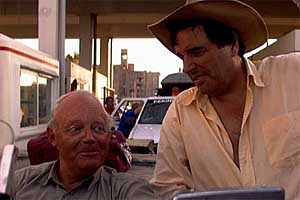 Rally organizer Philip Young (right) asks about Kjeld Jessen's ailing 1929 Bentley. But on the 20-hour ferry ride from Greece to Italy, Young makes the rounds, striding about in a bush hat covered with passport stamps, regaling the competitors with his motoring escapades. Like neglected children given an audience with their father, many of the drivers are thrilled. One motorist making a home movie focuses on Young chatting with a crowd and narrates: "This here is Philip Young, a man we have not seen for weeks." When someone asks what his next event will be, Young pauses: "Ask me Saturday." Then he sidles away. As usual, Young is a few days ahead of the itinerary, worrying about the gala dinner in Paris on Saturday, the rally's final day. The reception in the French capital, he warns motorists, will be nothing like what they experienced so far along the route. "In Pakistan you felt a light shining from above," he says wistfully. "In Iran they fell over backwards to please us. Big Don (Jones) arrived at the border with no passport, no carnet, singing 'I Left My Heart in San Francisco,' and they passed him right through. Now, in Paris, the hotels want $3,000 for a car park."
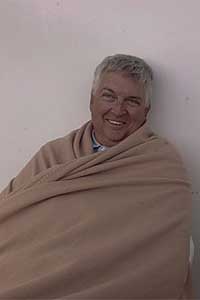 Driver "Big" Don Jones keeps warm on the deck of the ferry. Young may be a bit nostalgic about the countries just traversed (others recall their treatment in Iran and parts of Pakistan with less than fond memories), but the Brit and former Fleet Street journalist has reason to see the bright side of the rally. Young decided to attempt the second Beijing to Paris rally after reading the account of the original race, The Mad Motorists, a book by Allen Andrews. And as in the 1907, Young had to consider not only the terrain and weather variations in determining a route, but also the political climate. The Chinese were never ecstatic about the idea of foreigners tearing through their country, either the handful that arrived 90 years ago or the several hundred that showed up this September. In 1907 the Chinese refused to grant permission up until the morning the race was to begin. This year there were also problems. "Philip's greatest fear was that the Chinese would pull the plug on the entire event with any provocation," says Mike Sommerfield, the route coordinator, who has worked with Young on more than 10 rallies over the past decade. At several points the deal almost fell through, he explains. Ultimately, the organizers paid around $1 million to the Chinese government in fees and expenses.
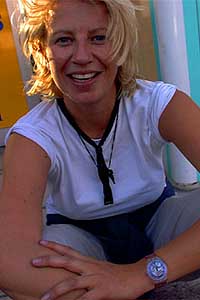 Philip's assistant, Sara Catt, has dealt with disgruntled drivers since Beijing. Young has been organizing rallies for more than a decade, building a reputation as a man with great ideas. But even while negotiating touchy political issues and traveling through some of the world's most sensitive nations, Young can be bafflingly naive on issues of protocol and customs. Sommerfield explains how Young offended a group of Muslim women in Pakistan by wearing shorts, then exacerbated the mistake by changing his trousers in their presence. And when he was tired of waiting at the border of Turkey, Young snatched the stamp out of a Turkish official's hand, Sommerfield says. "If Philip was in the U.S., he would be in therapy," says a member of Young's support staff. "In the UK he runs rallies." "Philip has one of those multiple personality situations, like eccentrics in horse racing circles," says driver Don Jones. "They tend to be roguish, flamboyant, anti-social. They also tend to be visionaries, dreamers and schemers. They tap into a unique urge, itch, that people have in their lives." Others are less enthusiastic about either Young's personality or his accomplishments. Malaysian driver Wong Peng Yew is livid at the rally's rule-bending and what he sees as its lack of competitiveness. Wong's major complaint: Some motorists in the "competitive" category failed to drive through the most difficult parts of the route but will still receive medals denied to him in the "tourist" division. When some "competitive" motorists had car troubles, particularly in the China-Tibet leg of the trip, they put their disabled vehicles on truck beds for a day or two, instead of repairing them on the spot and then braving the rough terrain. While the drivers will be penalized, they will still be given medals for "completing" the course -- even the parts they were towed through. As a "tourist" class participant, Wong will not be eligible for a medal, even though he's driven every inch of the route in his 1954 MGA. Some view the practice of shipping the cars through the toughest parts of the rally as tantamount to marathon runners catching a taxi through the steep hills, then getting out and finishing the race on foot.
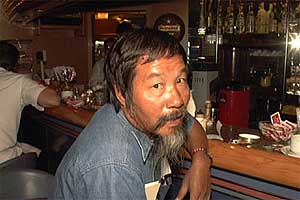 Driver Wong Peng Yew says he'll boycott the closing ceremonies in protest. "This rally is a challenge," says Wong. "If 99 cars left and 99 returned, where is the challenge? That's not a challenge, that's a joy ride." Wong plans to boycott the gala dinner in Paris in protest. Howard Bellm agrees with Wong's assessment: "It has been more like an afternoon outing than a rally," says the driver of a 1968 Chevrolet Camaro. Bellm says he could have driven the route in 24 days, rather than the 42 it will have taken as part of the rally. But others are appreciative of what Young has accomplished, shepherding nearly 100 cars and 200 people from Beijing into Europe.
"When I first met Philip in Chicago, he was standoffish and curt, but now I
understand," said Ray Carr, driver of a 1939 Ford convertible. "When I stood at
the ferry yesterday and saw all those cars, I thought: 'What a hell of a job
Philip's done.' I'm so proud of him. Someone had to be the master of it."
The Current Top Five
1. Phil Surtees/John Bayliss (Great Britain),
2. Ted Thomas/Vic Zannis (USA),
3. (tie) John Catt/Simon Catt (Great Britain),
3. (tie) Mohsen Eijadi/Ramin Khadem (Iran),
5. John Jung/Andy Vann (USA),
Pictures (from top right): Brown Brothers | Popperfoto/Archive Photos | Auburn Museum/Archive Photos | Drew Fellman/Candide Media Works Copyright © 1997 Discovery Communications, Inc. |